Whether pet insurance is "worth it" is a math question with an emotional edge. On average, people pay more in premiums than they get back, which is true of almost all insurance. The real question is whether you could, and would, pay a sudden $4,000 to $8,000 vet bill without insurance, and what you would do if you could not.
This guide gives you a way to answer that for your own pet: what coverage costs on average (NAPHIA's 2025 figures), how to estimate your break-even, when an emergency fund works better, and the scenarios where insurance clearly earns its keep. It finishes with a five-year comparison of an insured and a self-funded dog.
What pet insurance costs on average
The North American Pet Health Insurance Association reports these U.S. average annual premiums for 2025:
| Plan type | Dogs | Cats |
|---|---|---|
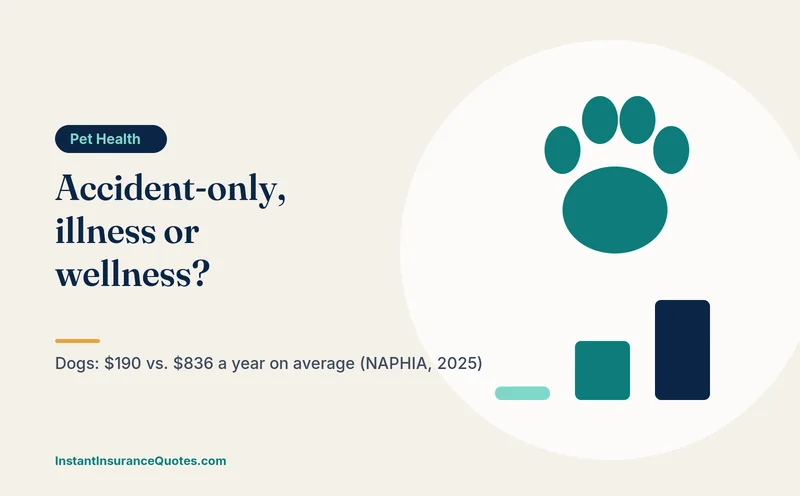
| Accident and illness | $836 | $435 |
| Accident only | $190 | $112 |
| Insurance with embedded wellness | $1,414 | $859 |
Accident-and-illness premiums for dogs rose 11.5 percent from 2024 and cat premiums rose 12.6 percent, after several years of smaller increases. Averages hide large spreads: a young mixed-breed cat in a low-cost area may pay a fraction of what an older large-breed dog in a major city pays. Treat these as context, not quotes.
A break-even way to think about it
A simple way to frame the decision is to compare three numbers:
- Yearly premium (P). From an actual quote.
- Your share of a big bill. With a $500 deductible and 80% reimbursement, your share of a $6,000 covered bill is $500 + 20% × $5,500 = $1,600.
- Your realistic cash buffer. What you could pay this month without debt.
On a large covered bill B, the plan pays (B − deductible) × reimbursement rate. Insurance comes out ahead in any year where that payout exceeds the premium. With a $836 premium, a $500 deductible and 80% reimbursement, the break-even bill is about $1,545 in a year. Below that, you would have been better off self-funding that year; above it, insurance wins, and by a lot on the largest bills.
| Covered vet bills in a year | Plan pays | Premium | Net benefit of insuring |
|---|---|---|---|
| $500 | $0 | $836 | −$836 |
| $1,545 | $836 | $836 | $0 |
| $3,000 | $2,000 | $836 | +$1,164 |
| $6,000 | $4,400 | $836 | +$3,564 |
| $10,000 | $7,600 | $836 | +$6,764 |
When insurance clearly helps
Insurance tends to be most valuable when:
- A large bill would force a hard choice. If a $5,000 emergency would mean debt or declining treatment, the predictability of insurance is worth more than its average cost.
- You insure young. Coverage started before problems appear avoids pre-existing condition exclusions that can follow a pet for life.
- Your breed has known costly conditions. Some breeds are prone to orthopedic, heart, skin or breathing problems. Confirm hereditary conditions are covered, not excluded.
- You would choose advanced care. Specialists, MRI, chemotherapy and surgery are where bills climb fastest.
- Your pet is active or prone to eating things. Accidents are a common source of big, sudden bills.
When an emergency fund can work
Self-funding can make sense when you have, and will keep, a dedicated pet emergency fund large enough to cover a major bill, and you are comfortable with the risk of more than one in a short time. Some owners pair a modest emergency fund with an accident-only plan to cap the worst emergencies at lower cost.
A savings plan has one structural weakness: in early years, the fund may be small when a big bill arrives. Insurance pays the large bill in year one; a fund grows into that capacity. If you choose to self-fund, automate the deposit, at least the premium you would have paid, into a separate account and leave it there.
The aging problem
Premiums usually rise as pets age, and many owners drop coverage when it gets expensive, just as claims become more likely. Before buying, ask for example renewal prices at older ages and consider whether you would keep the policy. In states that adopted the NAIC Pet Insurance Model Act, insurers must disclose whether they raise premiums or reduce coverage based on claims history, age or a change of location. Also confirm whether the plan can be renewed for life once the pet is older; some policies or insurers stop accepting new enrollments after a certain age, which is another reason to start early.
Limits to keep in mind
- Pre-existing conditions are excluded, so insurance bought after a diagnosis will not cover that condition.
- Routine care is excluded from accident-and-illness plans unless you add wellness benefits.
- Waiting periods delay coverage; under the model act, up to 30 days for illness, none for accidents.
- Exam fees, dental cleanings, behavioral therapy and prescription food may be excluded. Read the exclusions page.
- You usually pay the vet first and get reimbursed, so you still need cash or credit for the bill up front.
For a breakdown of plan types, see accident-only vs. accident and illness vs. wellness.
Questions to ask before you decide
If you decide insurance is worth considering, the comparison only works when quotes are lined up on the same terms. Before choosing, get answers to these questions in writing:
- What are the deductible, reimbursement rate and annual limit, and is the deductible annual or per condition?
- Are exam fees for sick visits covered? On a plan that excludes them, every claim comes back smaller.
- Which hereditary or congenital conditions common to my pet's breed are covered, limited or excluded?
- How does the premium change as my pet ages, and has the insurer published example renewal rates?
- Does the plan reimburse me, or can it pay the veterinarian directly? How long do reimbursements take?
- What are the waiting periods, and can an exam shorten them?
Record the answers next to each premium in our quote comparison worksheet. A plan that costs $8 more a month but covers exam fees and has no per-condition limits may return far more on the bills that actually happen.
Questions readers ask
Is pet insurance worth it for an indoor cat?
It can be, because cats develop costly illnesses such as kidney disease, diabetes and urinary blockages. Cat premiums are lower on average: NAPHIA reports $435 a year for accident-and-illness coverage in 2025.
Is it worth getting pet insurance for an older pet?
It can still help with new conditions, but premiums are higher and existing conditions are excluded. Compare the premium with a dedicated savings plan.
What is a good alternative to pet insurance?
A dedicated emergency fund, ideally large enough for a major bill, or an accident-only plan combined with savings. Some vets accept payment plans or third-party financing, which carry their own costs.
Can I cancel pet insurance if it is not worth it?
Generally yes. Under the NAIC model act, you also have 15 days after receiving a new policy to return it for a full refund if you have not filed a claim.
Do most people get back more than they pay?
No, on average premiums exceed claims, as with all insurance. Insurance is worth it when it protects you from a bill you could not comfortably absorb.
Sources and further reading
Sources checked October 25, 2026. Figures are the latest published by each source at that date.
- NAPHIA State of the Industry Report 2026, highlights (2025 U.S. average premiums)
- NAIC Pet Insurance Model Act (#633): disclosures, waiting periods, free look
- NAIC: Pet insurance consumer topic page
- American Veterinary Medical Association: Pet insurance for owners
General educational information, not advice for your situation. Policy wording, state law and the insurer's decision control actual coverage. Written and edited by K.R. Not reviewed by a licensed insurance agent; confirm details with a licensed professional or your insurer. Examples use hypothetical figures unless a source is named. Report a correction.
Use our worksheet to compare premiums, deductibles, and coverage differences. Your entries stay in this browser tab.
Open the quote comparison worksheetPet insurance: sponsored quote partners
Independent companies. We may be paid when you visit or apply. Not a ranking or a full list of the market.
Compare auto, home, renters and pet insurance options from one request.
Get quotes at Truvo →Sponsored · Affiliate linkRates, eligibility and coverage are set by each provider. Read its terms and privacy policy before applying. How we earn money.