
Life Insurance
Final Expense Insurance: Uses, Costs and Questions to Ask
Compare smaller permanent policies with savings and existing protection.
Term or permanent, how much coverage to consider, and the details that decide whether the money reaches the right people.

Photo: Nathan Dumlao on Unsplash
Life insurance replaces money your household would lose if you died: your income, the unpaid work you do, or debts that someone else would have to cover. The right policy depends less on product features and more on how long people will depend on you and how much they would need.
Term life covers a set period, commonly 10, 20 or 30 years, and pays only if you die during that term. It is usually the least expensive way to buy a large amount of coverage for a defined need, such as the years until a mortgage is paid or children are independent.
Permanent life (whole life, universal life and variations) is designed to last for life and may build cash value. Premiums are much higher for the same death benefit, and the policies are more complex, so it is worth understanding the guarantees, fees and what happens if you stop paying.
Final expense policies are small permanent policies intended to cover funeral costs and final bills, often with simplified underwriting.
Rather than relying on a single rule of thumb, add up what your household would need: years of income replacement, the mortgage and other debts, future costs such as childcare or education, and final expenses. Then subtract savings and any existing coverage, including a workplace policy, which usually ends if you leave the job.
Applications ask about health, habits and family history, and many fully underwritten policies include a short paramedical exam. Answer accurately: misstatements can cause problems when a claim is filed. Name primary and contingent beneficiaries, keep them current after marriage, divorce or a birth, and think carefully before naming a minor directly.
The guides below cover each decision. When comparing quotes, keep the coverage amount and term identical so the prices are truly comparable.
Compare smaller permanent policies with savings and existing protection.
Estimate income replacement, debts, future goals and available resources.
Understand primary, contingent and trust-related beneficiary decisions.
Prepare for common measurements, health questions and underwriting requests.
Compare duration, premiums, cash value and the financial needs each design may address.
Renewal, conversion and replacement explained, with deadlines to watch and how premiums change after the level period.
A worksheet for coverage amounts, choosing a term length, insuring a stay-at-home parent and laddering policies.
Use our quote request or go directly to a sponsored partner below. Read the guides first so you know which limits and deductibles to ask for.
Independent companies. We may be paid when you visit or apply. Not a ranking or a full list of the market.
Explore health, life and Medicare plan options with a licensed marketplace.
Get quotes at InsuranceMarket →Sponsored · Affiliate linkRates, eligibility and coverage are set by each provider. Read its terms and privacy policy before applying. How we earn money.
 Insurance FundamentalsInsurance Glossary: Plain-English Definitions
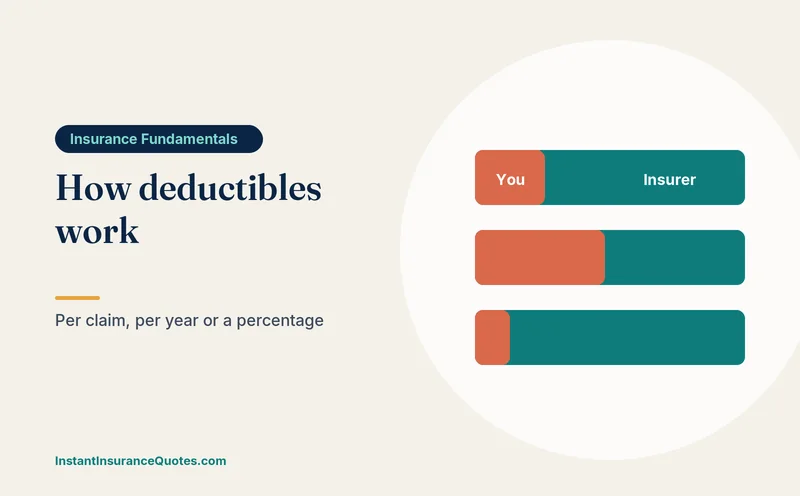 Insurance FundamentalsHow Insurance Deductibles Work Across Car, Home, Renters and Pet Policies
 Insurance FundamentalsInsurance Claim Documentation: Steps to Take After a Loss
 Insurance FundamentalsInsurance Exclusions and Endorsements: Why the Fine Print Matters