
Health & Medicare
Health Insurance Deductibles, Copays and Coinsurance Explained
Understand how common health-plan cost-sharing features work together.
How deductibles, copays, coinsurance and networks fit together, and how to compare plans on total cost rather than premium alone.

Photo: National Cancer Institute on Unsplash
Health plans are hard to compare because the monthly premium is only one piece of what you will pay. The plan that is cheapest each month can be the most expensive over a year if you need regular care, and a low-deductible plan is wasted money if you rarely see a doctor.
HMOs usually require you to stay in network and get referrals; PPOs allow out-of-network care at a higher cost; EPOs fall in between. Before choosing, check that your doctors, preferred hospital and prescriptions are covered, and look at the plan’s drug formulary.
Most people get coverage through an employer, the ACA Marketplace (HealthCare.gov or a state exchange), Medicaid or Medicare. Marketplace plans are grouped into Bronze, Silver, Gold and Platinum tiers that reflect how costs are shared, and income-based premium tax credits can lower the price. Open Enrollment for Marketplace plans generally runs from November 1 to January 15 in most states; outside that window, a qualifying life event such as losing other coverage, moving, marriage or a new child can open a Special Enrollment Period, usually lasting 60 days.
Estimate a realistic year of care, then add twelve months of premium to the deductible and cost sharing you would likely pay, and compare that total against each plan’s out-of-pocket maximum as a worst case. The guides below explain each step. Turning 65? See our Medicare guides.
Understand how common health-plan cost-sharing features work together.
Compare common network designs, referrals and out-of-network flexibility.
Compare total cost, provider access, medications and household healthcare needs.
Use our quote request or go directly to a sponsored partner below. Read the guides first so you know which limits and deductibles to ask for.
Independent companies. We may be paid when you visit or apply. Not a ranking or a full list of the market.
Explore health, life and Medicare plan options with a licensed marketplace.
Get quotes at InsuranceMarket →Sponsored · Affiliate linkRates, eligibility and coverage are set by each provider. Read its terms and privacy policy before applying. How we earn money.
 Insurance FundamentalsInsurance Glossary: Plain-English Definitions
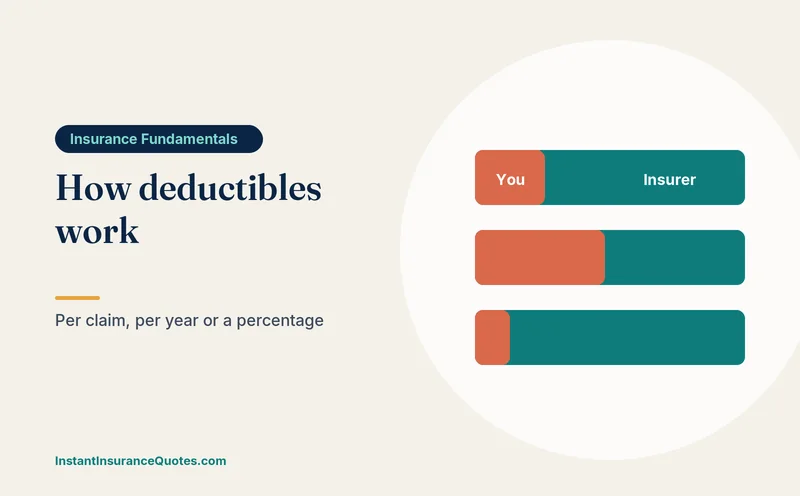 Insurance FundamentalsHow Insurance Deductibles Work Across Car, Home, Renters and Pet Policies
 Insurance FundamentalsInsurance Claim Documentation: Steps to Take After a Loss
 Insurance FundamentalsInsurance Exclusions and Endorsements: Why the Fine Print Matters