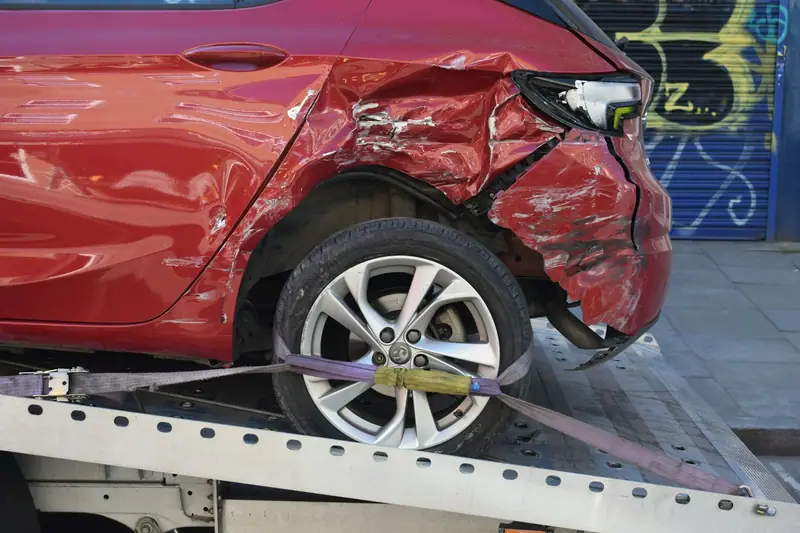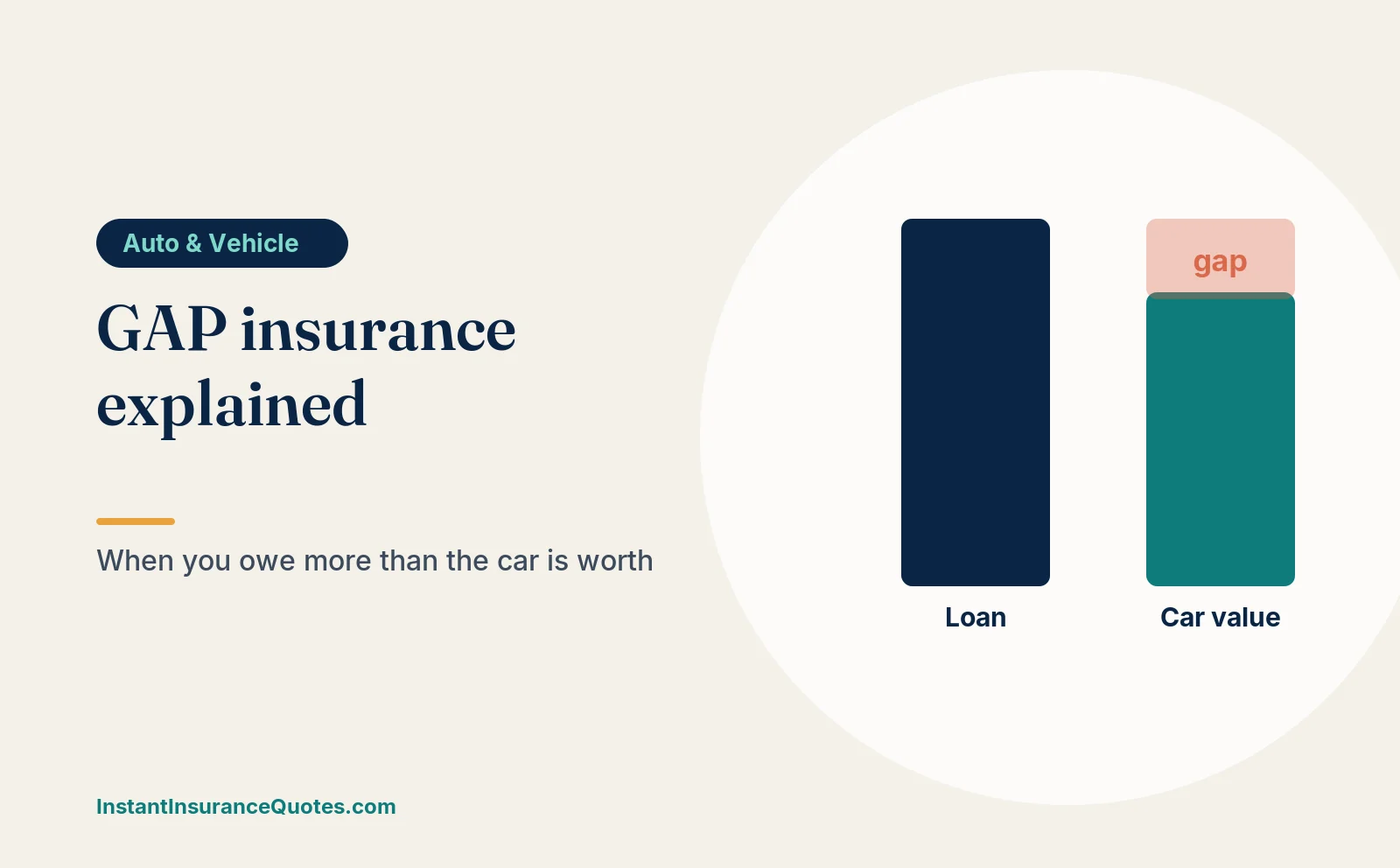
New cars lose value quickly, and long auto loans pay down slowly. In the first years of a loan, it is common to owe more than the car is worth. If the car is totaled or stolen in that window, your auto insurance pays the car's actual cash value, not your loan balance, and you still owe the difference.
Guaranteed asset protection, usually called GAP, is designed to cover that difference. The Consumer Financial Protection Bureau (CFPB) describes it as an optional product intended to cover the gap between what you owe on your auto loan and what your insurer pays if the car is stolen or totaled. This guide explains when you need it, the three places to get it, what it costs relative to the alternatives, and how to get a refund when you no longer need it.
How GAP works in a total loss
Your collision or comprehensive coverage pays the car's actual cash value, minus your deductible. If your loan balance is higher, GAP pays some or all of the difference, according to its terms.
| Amount | |
|---|---|
| Loan balance when the car is totaled | $27,500 |
| Insurer's actual cash value | $22,000 |
| Less collision deductible | −$1,000 |
| Insurance payment to the lender | $21,000 |
| Remaining loan balance (the gap) | $6,500 |
| GAP pays (if it covers the full gap; some cover part of the deductible too) | $5,500 to $6,500 |
GAP typically does not cover overdue payments, late fees, extended warranty charges rolled into the loan, or a down payment on your next car. Some products exclude negative equity carried over from a previous loan, or cap the payout, so read the contract.
When you are likely to need it
The CFPB's guidance is that you only need GAP while you owe more on the car than it is worth. Situations that make that likely:
- A down payment under about 20 percent.
- A loan term of 60 months or longer.
- Negative equity from a trade-in rolled into the new loan.
- A vehicle model that depreciates faster than average.
- High mileage driving, which reduces value faster.
- A lease. Many leases include GAP coverage already; check before buying it separately.
If you made a large down payment, financed for a short term, or bought a used car at a price well below its market value, you may never be underwater, and GAP would pay nothing.
Where to get GAP
| Source | How it is sold | Typical cost pattern | Watch for |
|---|---|---|---|
| Your auto insurer | As an endorsement, often called loan/lease payoff or gap coverage | Small addition to your premium, paid monthly or per term | Some versions cap the payout at a percentage of the car's value; must usually carry collision and comprehensive |
| Your bank or credit union | As a GAP waiver or debt cancellation product with the loan | One-time fee | Eligibility rules on vehicle age, loan-to-value and maximum benefit |
| The dealer | Added to the financing contract in the finance office | One-time fee, often financed into the loan with interest | Price is negotiable; cost is added to the amount you finance |
The CFPB notes that if you buy GAP from the dealer, the cost is added to the amount financed and you pay interest on it, increasing your payments. Its auto loan guide adds that add-on prices are negotiable, that your own auto insurer may offer GAP or alternatives, and that you can shop around.
Is GAP required?
The CFPB states that you generally cannot be required to buy GAP, extended warranties or credit insurance to get an auto loan; in most situations they are optional. If a dealer or lender presents GAP as mandatory, ask to see where the contract says so. If it truly is required as a condition of the credit, the CFPB explains that its cost must be included in the finance charge and the disclosed APR. You have the right to walk away from pressure to buy add-ons.
Before signing, ask the finance manager to list every optional product included in the contract and its price. Decline anything you do not want; it is far easier than cancelling later.
Cancelling and getting a refund
Once your loan balance falls below the car's value, GAP stops providing value. If you bought it as an insurance endorsement, you can usually remove it at your next billing date. If you paid a lump sum to a dealer or lender, you may be entitled to a refund of the unused portion when you cancel, sell the car, refinance or pay off the loan early.
The CFPB has reported finding servicers that failed to refund unused add-on premiums after early payoff and that made cancellation unnecessarily hard. To request a refund:
- Find the GAP contract or the loan contract listing the GAP charge.
- Contact the provider or dealer named in the contract and ask for the cancellation form and refund calculation.
- Send the request in writing with your payoff letter or sale documents, and keep copies.
- If you do not receive a refund you are owed, contact the lender and, if needed, submit a complaint to the CFPB or your state attorney general.
Check your equity
To check whether you are underwater, compare your loan payoff amount (from your lender) with the car's value from a pricing guide or real offers. Do this when you buy, then every six months or so. Many drivers find they cross into positive equity after two or three years, at which point GAP can go.
| Your situation | GAP likely worth considering? |
|---|---|
| $2,000 down on a $35,000 new car, 72-month loan | Yes, through the insurer if available |
| $8,000 down on a $32,000 car, 48-month loan | Probably not |
| Rolled $5,000 of negative equity into a new loan | Yes; confirm the product covers negative equity |
| Leasing | Check the lease; it may already include it |
| Paid cash | No |
Alternatives to GAP
GAP is not the only way to avoid being underwater. Depending on your budget, these steps shrink or eliminate the gap:
- A larger down payment. Putting 20 percent down often keeps the loan below the car's value from the start.
- A shorter loan. A 48-month loan builds equity much faster than a 72- or 84-month loan, though the monthly payment is higher.
- Avoid rolling negative equity forward. Paying off an underwater trade-in, or keeping the old car longer, prevents the gap from compounding.
- Extra principal payments. Even small additional payments in the first two years close the gap sooner; confirm your lender applies them to principal.
- New car replacement coverage. Some insurers offer coverage that pays for a new car of the same make and model if yours is totaled in its first year or two. It solves a different problem than GAP and may cost more.
If you choose one of these approaches instead of GAP, check your equity periodically as described above.
Questions readers ask
Is GAP insurance required?
Generally no. The CFPB says GAP, extended warranties and credit insurance are usually optional when you get an auto loan. A lease contract may include it.
How much does GAP insurance cost?
It varies by source. Insurer endorsements usually add a small amount to the premium, while dealer or lender products are a one-time fee that may be financed with interest. Prices for dealer add-ons are negotiable.
Can I buy GAP after I buy the car?
Often yes from your auto insurer, within limits on vehicle age and how long you have owned it. Ask soon after purchase.
Do I get a refund if I pay off my car loan early?
If you paid a lump sum, you are often entitled to a refund of the unused portion when the loan ends early. Request it in writing from the provider.
Does GAP cover my deductible?
Some products do, up to a limit; many do not. Check the contract.
Sources and further reading
Sources checked October 25, 2026. Figures are the latest published by each source at that date.
- CFPB: What is Guaranteed Asset Protection (GAP) insurance?
- CFPB: Am I required to purchase an extended warranty, GAP insurance or credit insurance to get an auto loan?
- CFPB: Take control of your auto loan, a step-by-step guide
- CFPB: Action on auto loan servicing and add-on product refunds (October 2024)
General educational information, not advice for your situation. Policy wording, state law and the insurer's decision control actual coverage. Written and edited by K.R. Not reviewed by a licensed insurance agent; confirm details with a licensed professional or your insurer. Examples use hypothetical figures unless a source is named. Report a correction.
Use our worksheet to compare premiums, deductibles, and coverage differences. Your entries stay in this browser tab.
Open the quote comparison worksheetAuto insurance: sponsored quote partners
Independent companies. We may be paid when you visit or apply. Not a ranking or a full list of the market.
Compare auto, home, renters and pet insurance options from one request.
Get quotes at Truvo →Sponsored · Affiliate linkRates, eligibility and coverage are set by each provider. Read its terms and privacy policy before applying. How we earn money.