After a car accident, the claim you file, and with whom, shapes how fast you get your car fixed and how much you pay out of pocket. Filing with your own insurer is usually faster but costs your deductible. Filing against the other driver's insurer can cost nothing out of pocket but depends on that insurer accepting fault. Knowing the difference, and doing a few things at the scene, avoids most of the frustration.
This guide covers the steps from the scene to the final check, using Arizona as the worked example. Arizona is an at-fault (tort) state: the driver who causes a crash is responsible for the damage, and minimum liability limits are 25/50/15, meaning $25,000 per person and $50,000 per accident for injuries and $15,000 for property damage, according to the Arizona Department of Insurance and Financial Institutions. Many other states work similarly; a minority use no-fault rules for injuries.
At the scene
Safety first: move to a safe spot if you can, turn on hazard lights and call 911 if anyone is hurt or the road is blocked. Arizona law requires drivers in an accident involving injury or damage to an attended vehicle to give their name, address and vehicle registration number, show their driver license on request, and render reasonable assistance to anyone injured (A.R.S. § 28-663). Then collect:
| What to collect | Why it matters |
|---|---|
| Other driver's name, phone, license number, insurer and policy number | Needed to open a claim with their insurer |
| License plates and vehicle descriptions for all cars | Identifies vehicles and owners |
| Photos of all vehicles, damage, the scene, skid marks, signals and signs | Evidence of how the crash happened |
| Names and phone numbers of witnesses | Independent accounts carry weight in fault decisions |
| Police report number and officer's name | Insurers use the report to evaluate fault |
| Your own notes: time, weather, direction of travel, what was said | Memories fade within days |
Do not argue about fault or sign anything at the scene other than what police require. Stick to facts. If you are injured, get medical care promptly and keep records.
Your insurer or theirs?
There are two kinds of auto claims, and you may use both:
| First-party claim (your insurer) | Third-party claim (other driver's insurer) | |
|---|---|---|
| Coverage used | Your collision, comprehensive, medical payments, uninsured motorist or rental coverage | The at-fault driver's liability coverage |
| Deductible | Yes, for collision and comprehensive | No |
| Speed | Usually faster; your insurer owes you duties under your contract | Can be slower; the other insurer investigates fault first |
| When fault is disputed | Your insurer pays under your coverage, then may pursue the other driver (subrogation) and try to recover your deductible | Payment may be delayed or denied |
| Rental car | Only if you bought rental reimbursement | Reasonable rental while your car is repaired, if they accept fault |
A common approach when the other driver is clearly at fault is to open a third-party claim, and if it stalls, switch to your own collision coverage and let your insurer pursue reimbursement. If the other driver has no insurance or too little, your uninsured and underinsured motorist coverage is designed for that situation.
Reporting the claim
Report the accident to your insurer promptly, even if you plan to claim against the other driver. Policies require prompt notice, and the other driver may file against you. When you call or use the app, have the police report number, the other driver's details, photos and a short factual description ready. Write down your claim number, the adjuster's name and direct contact.
In Arizona, an insurer must acknowledge a claim within 10 working days of notice, unless it pays within that time, and generally must complete its investigation within 30 days unless it reasonably cannot. It must tell a first-party claimant whether the claim is accepted or denied within 15 working days of receiving properly executed proofs of loss (A.A.C. R20-6-801).
Estimates, repairs and rentals
An appraiser or adjuster will estimate repairs, by photo, at a drive-in center or at the body shop. Things to know:
- You can usually choose your repair shop. Insurers may recommend a network shop with a workmanship guarantee, but generally cannot require you to use it. Check your policy and state rules.
- Supplements are normal. Shops often find hidden damage after disassembly and send a supplemental estimate to the insurer.
- Parts: estimates may specify aftermarket or used parts instead of original manufacturer (OEM) parts, depending on your policy and state law. Ask what your policy says.
- Rental: rental reimbursement on your own policy usually has a daily and total cap, such as $40 a day up to 30 days. Third-party claims should cover a reasonable rental of comparable vehicle while yours is repaired.
Total losses and diminished value
If repairs would cost more than the car is worth, or more than a state-set percentage of its value, the insurer declares it a total loss and pays its actual cash value: what a similar car in similar condition would sell for in your area just before the crash, minus your deductible on a first-party claim. You can challenge the valuation with listings for comparable vehicles, maintenance records and proof of recent upgrades.
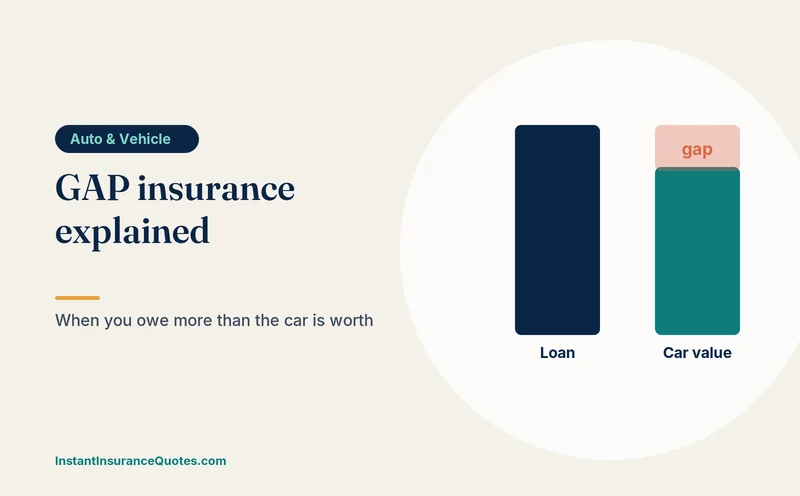
If you owe more on your loan than the car's value, the settlement may not pay off the loan. That shortfall is what gap insurance covers.
Even after a good repair, a car with an accident history may be worth less when sold. In at-fault states, you may be able to claim this diminished value from the at-fault driver's insurer. Claims against your own policy for diminished value are usually not covered. Expect to support the claim with an independent appraisal.
If someone was hurt
Injury claims follow a different timeline. Your medical payments coverage, if you have it, pays your own medical bills regardless of fault up to its limit. A claim against the at-fault driver's bodily injury liability coverage usually waits until your treatment is finished so the full cost is known. Keep every bill, record time off work and do not sign a release until you understand what it covers; a release usually ends the claim permanently.
Arizona's statute of limitations for lawsuits over personal injury or property damage is generally two years (A.R.S. § 12-542). Claims against a government entity have much shorter notice deadlines. For significant injuries, consider talking with an attorney well before any deadline.
Will a claim raise my rates?
Claims for accidents where you were at fault usually raise premiums at renewal; not-at-fault claims may or may not, depending on the insurer and state. Small damage close to your deductible may not be worth a claim, but always report any accident involving another party or injuries, since late notice can jeopardize your coverage if they later make a claim against you. For ideas on keeping costs down after a claim, see ways to lower auto insurance cost.
Questions readers ask
Should I file with my insurance or the other driver's?
If the other driver is clearly at fault and their insurer is responsive, a third-party claim avoids your deductible. If fault is disputed or the claim stalls, using your own collision coverage is usually faster; your insurer can seek reimbursement, including your deductible.
Do I have to report a minor accident to my insurer?
Policies require prompt notice of accidents. Even if you pay for minor damage yourself, reporting protects you if the other party later claims injuries.
How long do I have to file a car insurance claim in Arizona?
Report to insurers promptly. The deadline to sue over injury or property damage is generally two years under A.R.S. § 12-542, but waiting can weaken a claim.
What if the other driver has no insurance?
Your uninsured motorist coverage can pay for your injuries, and depending on your policy, collision or uninsured motorist property damage coverage may pay for your car.
Can my insurer total my car if it can still be fixed?
Yes. If repair costs approach or exceed the car's value, the insurer can declare a total loss and pay actual cash value instead.
Sources and further reading
Sources checked October 25, 2026. Figures are the latest published by each source at that date.
- Arizona DIFI: Automobile insurance minimum coverage (25/50/15)
- Arizona Revised Statutes § 28-663: Duty to give information and assistance
- Arizona Administrative Code R20-6-801: Unfair claims settlement practices
- Arizona Revised Statutes § 12-542: Two-year limitation for injury and property damage
- NAIC: Automobile insurance consumer resources
General educational information, not advice for your situation. Policy wording, state law and the insurer's decision control actual coverage. Written and edited by K.R. Not reviewed by a licensed insurance agent; confirm details with a licensed professional or your insurer. Examples use hypothetical figures unless a source is named. Report a correction.
Use our worksheet to compare premiums, deductibles, and coverage differences. Your entries stay in this browser tab.
Open the quote comparison worksheetAuto insurance: sponsored quote partners
Independent companies. We may be paid when you visit or apply. Not a ranking or a full list of the market.
Compare auto, home, renters and pet insurance options from one request.
Get quotes at Truvo →Sponsored · Affiliate linkRates, eligibility and coverage are set by each provider. Read its terms and privacy policy before applying. How we earn money.